|
|||||||||
|
|
Andy Toy Poised to Become Philadelphia’s First Asian-American CouncilmanWide cross-ethnic support, years of economic and green development work, could put Chinese American over the top for at-large seat in May 15 election
According to a Brookings Institution report from 2003 and research updated since, Philadelphia has been in decline after a boom period in the 90s. Although the City of Brotherly Love – my old hometown, where I was born, where I’ve just returned for a several-month stay – has gained Black, Asian and Hispanic residents in the last decade, many of them new immigrants, a flight of white residents and jobs from the central city has hit Philly hard. According to the report, fewer than 30 percent of the region's workers are employed in Center City, and the traditionally high level of homeownership is also declining. Sadly, the “cradle of liberty” now has the highest poverty rate of the top 10 major U.S. cities. These were the statistics that Andy Toy cited when I asked why he was running to become Philadelphia’s first Asian American at-large city councilman in the city’s May 15 elections. These are the problems that need fixing, said Toy. And he believes he’s the man to do it. It certainly looks it on paper. With degrees in both Economics and Public/Urban Policy from the University of Pennsylvania, Toy has actually gotten a head start on tackling the twin problems of the city’s economic development and neighborhood inequities. With 15 years’ service in the City Commerce Department under his belt, he has had the benefit of getting an inside peek at how to get the city bureaucracy moving. He directed the Mayor’s Business Services team for a time, and attracted $2.5 million to support an award-winning program to clean up contaminated neighborhoods. In person, too, Toy is clearly smart – Ivy League smart – and knows a ton about how the city works and fails to work. But merely coming across as very intelligent and knowledgeable is not always a boon to a political candidate, and perhaps especially an Asian-American candidate. (His photo in the Chinatown version of his campaign posters makes him look a bit more staid and wonkish than he is – the sort of straight-laced Nice Chinese Boy that moms want daughters to marry.) Yet, Toy (“Andy,” as he insists) is warm and well spoken – which also is not always the case with candidates who are intelligent. In conversation, he makes easy, genuine-seeming, casual connections about everything from travel experiences to environmental clean-up to playing electric guitar (he’s a devotee of, and thrilled to have met, his idol Carlos Santana) and multiculturalism in the city’s schools. He’s not a chatterbox, though, and doesn’t have the kind of practiced schmooze of a career politician. Asking around, I suspect that this is something voters will admire in him. He doesn’t sound like he’s always aspired to run for office. He sounds instead like a guy who, after putting years of hard work into public service outside of politics, has come to understand how to do things better. He admits he’s a little nervous, having dropped everything, quit a good job, and sacrificed a lot of family time to try to be the first Asian American councilman in a city that’s never elected one. But his wife of 18 years, Pat, is stalwart in her support; and children, Owen, 12, and Zoey, 14, are clearly proud of their dad, and suffer the intrusions of campaign life with good humor.
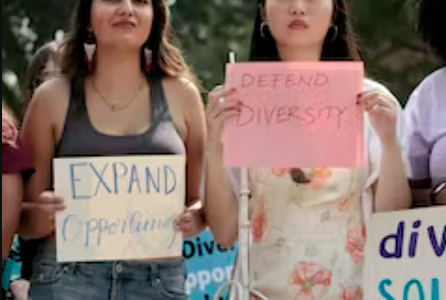
Diversity as a Development ImperativeToy’s also attracted the support of many past and present neighbors who had been witness to his community development work. They cite his work on the “Brownfields” project, in which he raised $2.5 million earmarked for the clean-up and transformation of dead, contaminated land into neighborhood green spaces. He was also key to a community effort to stop a railroad operator from shutting off access to public parks on the Schuykill River. Toy says the strong support of the neighbors and beneficiaries of such actions helped spur his decision to run, and many have signed up as volunteers or fundraising hosts. The diversity of his supporters will be key to Toy’s victory. Sure, he hopes to, and would be proud to, become the first Asian American councilman in his city. Unsurprisingly, his face is all over Chinatown, and he has attracted attention of national groups such as APAs for Progress, even as Boston’s Sam Yoon did in 2005. But although he served on Governor Rendell’s Commission of Asian Americans and as Board Chair for the city’s Chinatown Development Corporation, Toy knows he can’t win the at-large seat as the “Asian American candidate,” and he really doesn’t want to. But he does believe that building multicultural connections among the city’s often-segregated communities is imperative to the survival and success of them all. Diversity is a key theme of his campaign, but for Toy, fostering educational, employment and financial equity is not just campaign rhetoric. He believes strongly that creating such opportunities is a necessity – that attracting, training, and retaining people of color and, significantly, immigrants is crucial to reversing the city’s slide. Toy is the descendant of immigrants who struggled against hard odds, through the usual ups and downs of building lives and small businesses in America. In a campaign video by the Chinese-American filmmaker Eric Byler, Toy compares Philadelphia to other turned-around cities. “We have to realize…” he says, “What stemmed the population loss and helped New York, Boston and Chicago is that they had a lot of immigrants come in and create vibrant communities and a great mix. It’s an economic development issue, really.” He observes that Philly has the sad distinction of also having the highest Hispanic poverty rate among the 23 Living Cities, and has made diversity in business contracting a campaign promise, vowing to “ensure that people of color and women share in all economic opportunities including city contracts.”
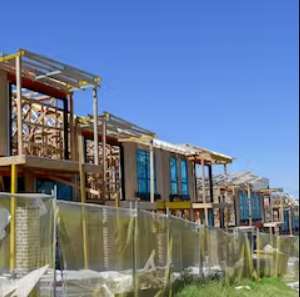
Toy’s track record of working hands-on in both economic and green development in many of the city’s poorer, predominantly minority neighborhoods also extends beyond just his work for the city. He worked five years, for example, with the Local Initiative Support Corporation, an organization dedicated to developing viable commercial corridors in nine neighborhoods, some of which were among Philly’s most run-down, plagued by high poverty and crime for decades. Symbolically, his campaign HQ is situated in such a neighborhood, rather than in some quaint Old City colonial digs or gleaming Center City high-rise. What was once a frankly scary neighborhood, on the northern edge of the city, above Chinatown and Spring Garden, now looks like a huge construction site, rough around the edges but vibrant with modest new homes, with porches and even yards with small, bright lawns. And here, it’s not uncommon to see residents of all mixed backgrounds sporting his campaign’s “Toys4Us” or “Button #84” buttons or yard signs. On the campaign trail, he tells an anecdote about his great-grandfather “who came here from China with really nothing but the clothes on his back and a piece of wood inscribed with the words, ‘Honesty Endures’.” It’s a vision that resonates not just with immigrant audiences, but with people of all walks who are sick of the city’s entrenched “pay to play” way of doing business. It seems to be resonating with a surprisingly varied racial, class, and geographic cross-section of a city that’s aware it should be doing better than it is, and faces some big problems unworthy of its greatness. Andy Toy hopes that it will resonate still when the time comes to push Button #84 on May 15 so he can start the hard work of fixing them. On the Web
Other Readings of Interest @ Asian-American Village
|
||||||||||||||||||||||||||||||||||||||||||||||||||||||
|
|
||||||||||||||||||||||||||||||||||||||||||||||||||||||||
|