Template for Creating New Headers - Must Add Banman Zone
Click logo for homepage of IMDiversity.com - where careers, opportunities and communities connect
home | search jobs | my account employer profiles | career center | about us | for employers
Featured Employers


Featured Jobs

View Featured Jobs

Asian American Village Categories
AAV Jobs Center
AAV Blog
Arts, Culture & Media
Business, Finance & Economics
Careers, Workplace, Employment
Civil, Human & Equal Rights
Education & Academia
Family, Lifestyles, Traditions
History & Heritage
Opinion and Letters
Politics & Law
World Affairs
News & Announcements
Reference
Organizations & Links
Browse Full Index


Asian-American Village News
Three win Nobel chemistry prize for research
Madia raises almost $1M in 3rd District race
DE man pleads guilty to posing as admiral
CT man recounts fleeing Vietnam
Uwajimaya grocery celebrates 80th anniversary
villages/asian/ AP Headlines Update Pagee
Secret Asian Man

Also


Graduate School Opportunities

QuickSearch: Jobs preferring Bilingual/ Multilingual Candidates


Review: Internment Books for Kids

Titles Sensitively Address Tough Themes of Discrimination and Friendship in Wartime

By Frances Kai-Hwa Wang, AAV Contributing Editor


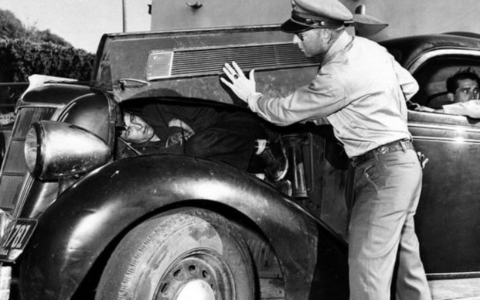
I did not mean to introduce my children to the history of Japanese Americans and the internment camps at so young an age. It was an accident. I was reading a book aloud to my children without previewing it myself first because I was on deadline and had to write a review of it that night. Don’t ever do this. Then I turned a page, and there was a picture of fair-haired American soldiers pointing rifles at a room full of people that looked like us. My children, only two and three years old at the time, were frightened and confused. Oops. Like I said, don’t ever do it this way.

On the positive side, since they were introduced to it at such a young age, they have always known about it. I never had to steel myself for "The Talk" to explain it to them. Given the choice, I am sure I would have put it off for as long as I could, maybe even forever. I certainly understand now why many of the Issei and Nisei who lived in the camps did not tell the Sansei and Yonsei generations—something I did not understand at all before I had children and had to explain it myself.

Luckily there are now many wonderful books to make this difficult story a little easier to explain. Some of these have been included in my earlier reviews of picture books about growing up Asian American, but some were fresh, recent discoveries for me approaching the February 19 Day of Remembrance. Two titles, by the wonderful JA author Ken Mochizuki, are not about internment, but nonetheless feature nikkei characters thoughtfully and movingly portrayed against a backdrop of war. All are worthy readings that sensitively broach tough but important themes of discrimination and friendship, war and courage, injustice and reconciliation. In this sense, all can be enriching and relevant for parents and kids of any background, in any era. -- Frances


The Bracelet
By Yoshiko Uchida, Illustrated by Joanna Yardley
Putnam & Grosset Group, New York, 1976, 1993, 1996
ISBN Number: 0-698-11390-X

kiduchida6.gif (17285 bytes)Just before seven year old Emi leaves home for the internment camps with her family, her best friend Laurie Madison comes to say goodbye and give her a bracelet. Emi puts it on immediately and promises never to take it off. However, in the course of going to the check-in center, taking the bus to Tanforan Racetracks, and settling into the horse stall that is to be their home until they go another camp in the Utah desert, Emi loses the bracelet, the one thing that would help her remember her best friend. Then she realizes that she can remember those she carries in her heart without things like photos or bracelets. A story of friendship which gently introduces the history of the Japanese American internment camps. Also by Yoshiko Uchida (Donald Carrick, illustrator): Journey to Topaz.


Flowers from Mariko
By R. Noguchi & D. Jenks, Illustrated by M. Reiko Kumata
ISBN Number: 1584300329

Mariko's family has been freed from a Japanese-American internment camp, but the transition hasn't been easy. Because her father's truck has disappeared, he can't start up his gardening business, and the family must move to a trailer park. One day, Mariko's father gives her two seed envelopes. She plants the seeds and even serenades them. However, Mariko's father is so preoccupied that he doesn't notice her garden—until he hears her singing. At last he smiles. Flowers from Mariko tells of a family striving to re-establish their lives—through hope, perseverance, and love.


Baseball Saved Us
By Ken Mochizuki, Illustrated by Dom Lee
ISBN Number: 1880000199

Baseball Saved UsIn a desert landscape surrounded by barbed wire and guards with guns, Japanese Americans set out to build a baseball field in their internment camp. Told by a young boy, this narrative displays the strength of a group of people having to endure injustice and degradation. Baseball provides the source of strength with everyone working to make uniforms and clear the field. Awards: Parents’ Choice Award, Publishers Weekly Best Multicultural Title, Lee and Low Books Award Winner.


Heroes
By Ken Mochizuki, Illustrated by Dom Lee
ISBN Number: 1880000164

Set in the 1960’s against the backdrop of the Vietnam War, Donnie, a Japanese American boy, grows tired of always playing the bad guy when playing war with his friends just because he "looked like them." His father and uncle served in the US Army, and Donnie must to prove this to his friends while his family discourages him from playing army. "Real heroes don't brag" is the message encouraged by his uncle. The underdog heroes are celebrated with honor and dignity without the bravado of today’s media messages. Also available in a Spanish version. Awards: Teachers’ Choice Award, Smithsonian Notable Children’s Book.


Passage to Freedom - The Sugihara Story
By Ken Mochizuki, Illustrated by Dom Lee
ISBN Number: 1-880000-49-0
A moving and true story about Chiune Sugihara, the "Japanese Schindler," who, with his family's encouragement, saved thousands of Jews in Lithuania during World War II. Unable to ignore the plight and pleading of the refugees, this Japanese diplomat went against his government's wishes to issue the many visas that remained their only hope for freedom and life. A powerful story certain to prove how much a difference one person can make. With an afterward from his son, Hiroki Sugihara, about his life after the war and the "Sugihara survivors." Awards: Publisher's Weekly Starred review, American Bookseller Pick of the Lists, Parenting Magazine Reading Magic Award.


So Far From the Sea
By Eve Bunting, Illustrated by Chris K. Soentpiet
ISBN Number: 0395572095

Before Laura's family moves across the country to Massachusetts, her family makes one last trip to her grandfather's grave at the Manzanar War Relocation Camp. While cleaning up his grave, her parents explain what the camps and the relocation were like. Laura remembers a story about how her grandfather told her father to put on his Cub Scout uniform so that the soldiers who came to get them would know they were Americans, and leaves as an offering her father’s Cub Scout scarf to show that her grandfather "was a true American." The illustrations alternate between black and white "flashbacks" and color pictures of the present. The story also moves fluidly between past and present.


Farewell to Manzanar: A True Story of Japanese American Experience During and After the World War II Internment
By Jeanne Wakatsuki Houston, James D. Houston
ISBN: 0553272586

Jeanne Wakatsuki was seven years old in 1942 when her family was uprooted from their home and sent to live at the Manzanar internment camp with 10,000 other Japanese Americans. Along with searchlight towers and armed guards, Manzanar ludicrously featured cheerleaders, Boy Scouts, sock hops, baton twirling lessons and a dance band called The Jive Bombers who would play any popular song except the nation's #1 hit: "Don't Fence Me In."

At age thirty-seven, Jeanne Wakatsuki Houston recalls life at Manzanar through the eyes of the child she was. She tells of her fear, confusion, and bewilderment as well as the dignity and great resourcefulness of people in oppressive and demeaning circumstances. Written with her husband, Jeanne delivers a powerful first-person account that reveals her search for the meaning of Manzanar.

Farewell to Manzanar has become a staple of curriculum in schools and on campuses across the country. Last year the San Francisco Chronicle named it one of the twentieth century’s 100 best nonfiction books from west of the Rockies.


The Children of Topaz - The Story of a Japanese-American Internment Camp Based on a Classroom Diary
By Michael O. Tunnell
ISBN Number: 0823412393

After the attack on Pearl Harbor during World War II, Japanese-Americans were ordered by the U.S. government to leave their homes and be interned. Lillian "Anne" Yamauchi Hori was a third-grade teacher in the Topaz, Utah, internment camp whose class kept a daily diary. Although the students experienced injustices, their diary revealed their many regular activities: collecting desert pets, putting on plays and celebrating holidays. A great resource book on internment camp experience. Ages 12 & up.


Blue Jay in the Desert
By Marlene Shigekawa; illustrations by Isao Kikuchi
ISBN Number: 1879965046
(Recommendation written by the Asian American Curriculum Project)

Bluejay in the DesertThis is the story of a Japanese-American boy and his family who are interned during World War II. Young Junior doesn't quite understand what the internment is all about but through his eyes we are able to see how it has affected the adults around him. Fortunately for Junior, he has Grandfather and from Grandfather he receives a special message of hope. This picture book introduces children to the history of the Japanese American internment. 36 pages, hardbound with paper jacket; full color illustrations and a brief historical overview of the Japanese American internment. Showcased by Teaching Tolerance Magazine.


Related Readings

  • For Kids section in the APA LIVING
  • Feb. 19 Internment Day of Remembrance
    On the anniversary of EO 9066, AAV's special section recalls the impact of the WWII internment
  • Creating Good Multicultural Literature
    On the challenges of publishing multicultural books, by Philip Lee, Editor-in-Chief of Lee & Low Books
  • Teaching about Japanese-American Internment
    Guidance for teachers by Gary Mukai, from our ERIC APA Issues in Education readings series
Frances Kai-Hwa Wang

Frances Kai-Hwa Wang is a second-generation Chinese American from California who now divides her time between Michigan and the Big Island of Hawaii. She is currently an acting editor for IMDiversity.com's Asian-American Village, where she writes most frequently on culture, family, arts, and lifestyles topics. Her articles have appeared in Pacific Citizen, Asian Reader, Nikkei West, Sampan, Mavin, Eurasian Nation, and various Families with Children from China publications. She has also worked in anthropology and international development in Nepal, and in nonprofits and small business start-ups in the US. She is also the Outreach Coordinator of the Ann Arbor Chinese Center of Michigan and a much sought public speaker. She has four children. She can be reached at fkwang@aol.com.

IMDiversity.com is committed to presenting diverse points of view. However, the viewpoint expressed in this article is the opinion of the author and is not necessarily the viewpoint of the owners or employees at IMD.


IMDiversity, Inc.
contact us
© 2008 IMDiversity Inc. All Rights Reserved.
privacy statement