Template for Creating New Headers - Must Add Banman Zone
Click logo for homepage of IMDiversity.com - where careers, opportunities and communities connect
home | search jobs | my account employer profiles | career center | about us | for employers
Featured Employers


Featured Jobs

View Featured Jobs

$100K-PLUS Jobs

Asian American Village Categories
Asian American Village Jobs Center
AAV Blog
Arts, Culture & Media
Business, Finance & Economics
Careers, Workplace, Employment
Civil, Human & Equal Rights
Education & Academia
Family, Lifestyles, Traditions
History & Heritage
Opinion and Letters
Politics & Law
World Affairs
News & Announcements
Reference
Organizations & Links
Browse Full Index
 

Asian-American Village News
Analysis: Jindal, lawmakers face grim new reality
Philly mayor signs casino zoning legislation
American Samoa votes on governor Tuesday
Don Ho heirs dispute estate settlement
Their economy booming, Chinese students head to US
villages/asian/ AP Headlines Update Pagee
Secret Asian Man

Also


Graduate School Opportunities

QuickSearch: Jobs preferring Bilingual/ Multilingual Candidates


The Perpetual Stranger -- A Chinese American's Letter from Paris

By Andrea Quong, New America Media

An American writer moving to Paris looked forward to a city of romance and luxury, but found she couldn't shake her "outsider" status among the French. But she finds hope in diverse immigrant neighborhoods where the walls between people come down.


MONTREUIL, France- Nov 18, 2005-Before I moved to Paris a few years ago, a French expatriate friend in Berkeley gave me her pocket-sized map of the city and one piece of advice.  "Whatever you do," she warned, "live in Paris. Don't live in the suburbs."

From a distance, I couldn't have agreed more. Like many Americans, I believed Paris was a romantic city de luxe, a place where the heart and the imagination could take flight and, if one had money, a place where one could really live. It seemed an appropriate setting to launch a romance with the man I had fallen in love with.

He happened to be French. We'd met in Kunming, China, and now he was in Paris writing up his dissertation on an obscure ethnic minority in China's Yunnan Province.

When I arrived, he was living in a monastic chambre-de-bonne amid the rooftops of the 9th arrondissement near the Gare du Nord. The toilet was in a broom closet down the hall, and the shower a step away from the kitchenette and the bed. At night, a tiny balcony afforded a majestic view of the Eiffel Tower showering its pale light on the cold city, and the bakery downstairs made a campaillette, a crustier and tastier version of the baguette, to die for. But there wasn't enough room for both of us. We ended up moving to the suburbs.

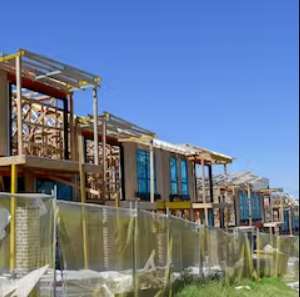
The new flat was in Montreuil, a "proche banlieue" east of the city. Center city was a 20-minute subway ride away, the périphérique, the big freeway that encircles Paris, a block-and-a-half on foot. The neighborhood itself was dingy with old, falling-apart apartment buildings and abandoned factories that were being torn down to make way for sleek new office buildings. Still, if you looked hard enough, you could spot the Eiffel Tower glimmering on the western horizon. I was full of hope and open to the possibilities.

But that hope began to fade, replaced by the reality of life in the inner suburbs, where Paris' facade of glamour and sophistication had fallen away. On the street, my Asian face and my anglophone accent were clues that told my neighbors, the boulanger, the video store kid, the newsstand owner, the supermarket cashier, that I was an outsider. I'm not French, and it seems, sometimes, that's all that matters.

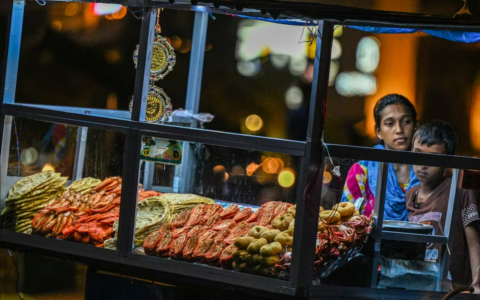
One of the first things I noticed both in and out of Paris were the cafeteria-like Chinese take-out joints. Based on the French model of the traiteur, a caterer who sells pre-prepared food, none of the food is cooked on order. Instead, spring rolls and shrimp dumplings of indeterminate age and origin are kept on display in a refrigerated case. When a customer comes by, the food is dished out into a plastic bin and popped into the microwave. That may work for brandade de morue, but it violates the first principle of Chinese cuisine that food be fresh and just-cooked, as any self-respecting Chinese cook (or chowhound) from San Francisco to the Bronx knows. Discriminating and refined when it comes to French food, the French come off as negligent, even willfully ignorant, of the cuisines of other cultures. "Chinese" restaurants bill themselves as serving Chinese, Vietnamese, Thai and sometimes even Laotian and Cambodian, all at the same time. It's all "chinois" or "asiatique:" Parisians don't bother to make the distinction.

Nor does my downstairs neighbor, Jorge. Like many Parisians, he's perfectly polite and often stops to chat and joke. Born in Argentina, he came to France when he was 12; his wife, from Ecuador, has a similar story. At home they speak Spanish together and play salsa, yet they are thoroughly French. Once, when I was making small talk, I asked him if he had ever been to the States. "Never," he replied, forgetting that I was American he was so convinced I was from China. "I'm just not at all interested in going there. There's something about Americans I don't like."

The first time I went to the Sunday market in my neighborhood, I stood waiting for 20 minutes while the market woman ignored me and served friends and customers she knew. After two years, I'm now a regular customer at the market, frequenting the same potato-seller, vegetable merchant and poulterer. Everyone knows I am a foreigner -- maybe they even recognize my face (considering there are few other Asians around) -- but no one has once asked where I'm from.

So I ended up befriending other outsiders.

In the beginning, there was Dirk, the German man who sold newspapers and dreamed of riding the rails across America. When I met him he was stranded in Paris, after falling out with his French girlfriend. Then I met Kamal, an insulation-installer from Punjab who speaks neither French nor English but is the most persistent of friends. Chiki is a knife-grinder of gypsy blood who walks the streets of my neighborhood, ringing a big cow bell and pushing a cart with a pedal-powered grindstone.

Among my boyfriend's family and friends, I've found acceptance and kindness. But as my own person out in this world I've found there's no place for me here.

It's as if the people here are in a holding pattern, the social codes rigidly upheld out of habit. The French, in Paris at least, won't cede social space for an outsider -- unless that outsider is an admirer of French culture, history and language, not the other way around. There is little room for exchange. And this is the fatal flaw that prevents France from moving forward.

Ironically, where walls do come down are in ethnically mixed, working class districts like Belleville, in northeastern Paris -- exactly the kind of place France's top leaders hope tourists will never see. And yet, these "unattractive" neighborhoods are among the most vibrant in the city.

At the morning market in Paris' Belleville, Chinese and African immigrants, the latter clad in boldly patterned tunics and wraps, rub shoulders with Arab and "white" shoppers. To be sure, this mix creates tensions, but it also creates openings. Take the melon-seller, who, like most of the merchants, is from the Maghreb, the French and Arabic term for North Africa. He sprinkles his entreaties to the throng of customers with French and Arabic, and when he spots a Chinese woman shopping, he inevitably yells out, "Ni hao!"

I never thought I would find that so charming.


Oakland, Calif.-born journalist and writer Andrea Quong is working on a book set in the Chinese countryside.

Pacific News Service

Copyright by Pacific News Service and New American Media.  All rights reserved.

Founded in 1969, Pacific News Service is a nonprofit media organization dedicated to bringing the seldom heard, often most misunderstood or ignored voices and ideas into the public forum. PNS produces a daily news syndicate and sponsors magazine articles, books, TV segments and films.

New American Media (formerly New California Media) is a nationwide association of over 700 ethnic media organizations representing the development of a more inclusive journalism. Founded in 1996 by Pacific News Service, NAM promotes ethnic media through events such as the Ethnic Media Expo and Ethnic Media Awards, a National Directory of Ethnic Media, and such initiatives as the online feature Exchange Headlines from Ethnic Media, offering top headlines digested from ethnic media worldwide, updated five days a week.

IMDiversity.com is committed to presenting diverse points of view. However, the viewpoint expressed in this article is the opinion of the author and is not necessarily the viewpoint of the owners or employees at IMD.


IMDiversity, Inc.
contact us
© 2008 IMDiversity Inc. All Rights Reserved.
privacy statement